Wokeness and Its Role in the Left’s Internal Conflicts
From unexpected quarters, criticism is rising against the stringent aspects of today’s political correctness, which emphasizes identity and differences.
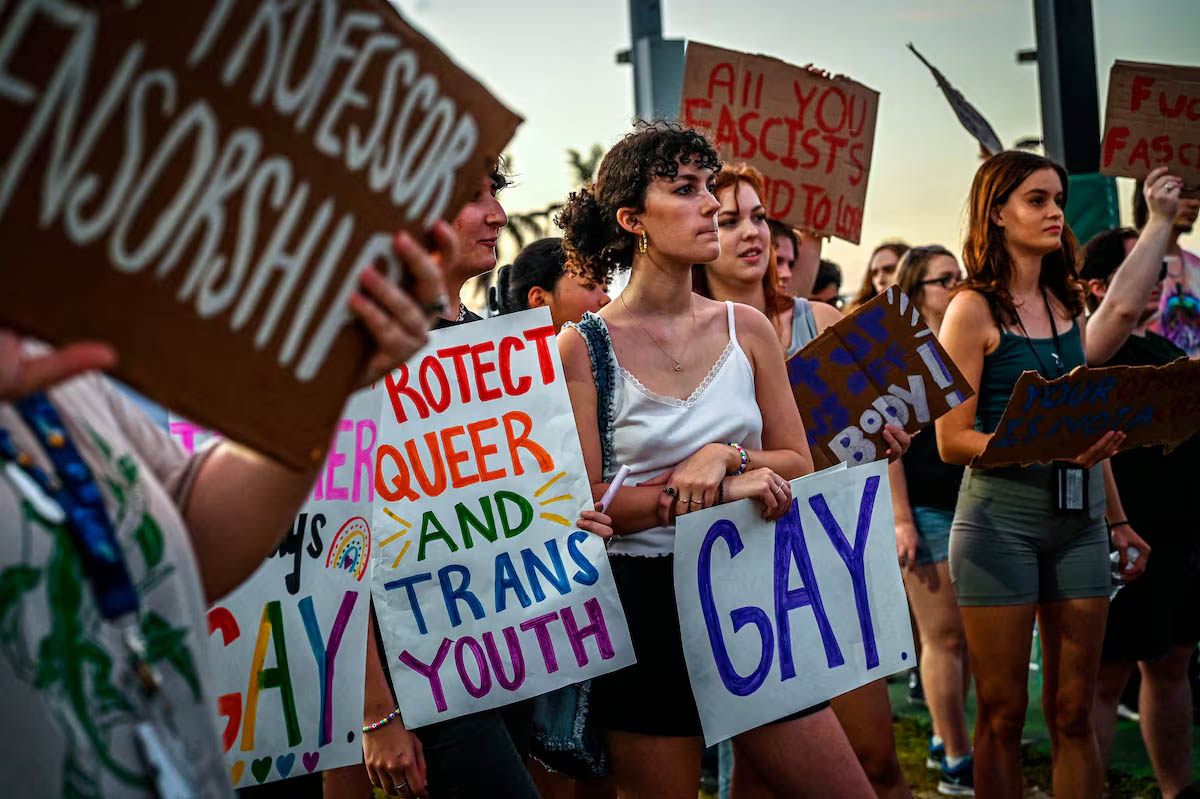
Protesters in Florida
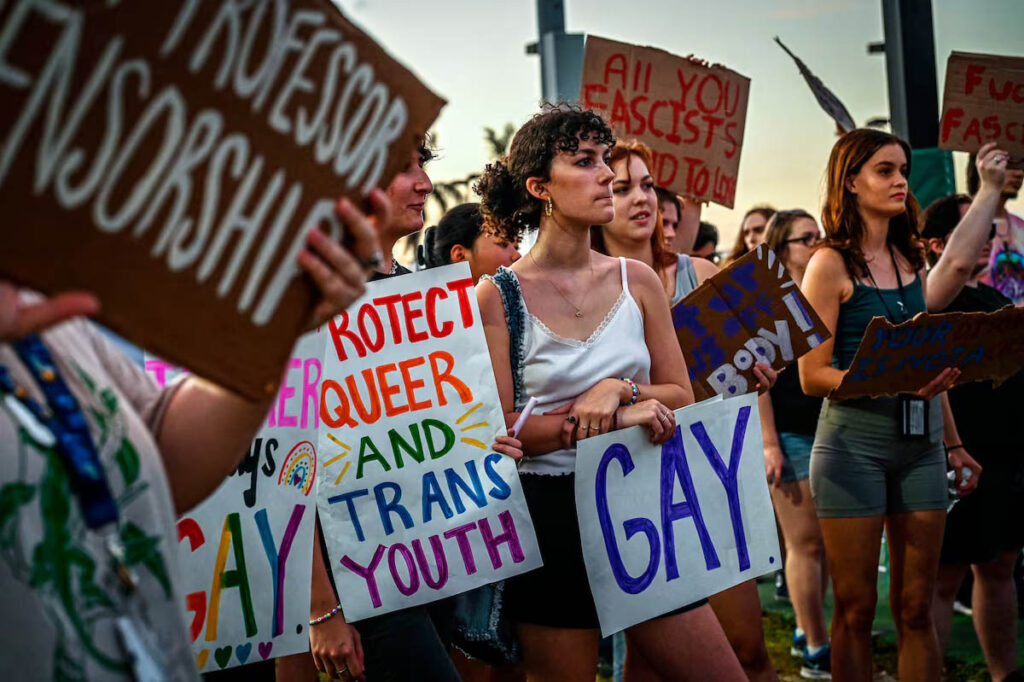
(Giorgio Viera/AFP/Getty Images)
Wokeness isn’t what it once was. Initially, it described those attuned to and fighting against social injustice, prominently in U.S. politics, but also echoed in other countries to varying extents. Activists, striving for social and climate justice—from Black Lives Matter to #MeToo and the battle against global warming—embraced ‘woke’ as a badge of honor, symbolizing a new era of equality and justice.
However, the term has been co-opted by a rising anti-woke movement. This backlash, initially from the right, has now reached parts of the left, who criticize what they see as the excesses and narrow focus of wokeness. This transformation has turned ‘woke’ into a term of derision. Progressive causes are now scrutinized by both the right and left, creating internal strife among left-wing factions. Authors and philosophers like Susan Neiman, Umut Özkirimli, and Stéphanie Roza reflect these tensions, alongside vocal right-wing critics.
“Ultraconservatives in the U.S. Republican Party have twisted ‘woke’ into a catch-all critique against any progressive agenda, from racism education and feminism to identity politics,” explains Lucía Lijtmaer, journalist and author of Ofendiditos. This anti-woke sentiment, especially among U.S. conservatives, has almost become a movement.
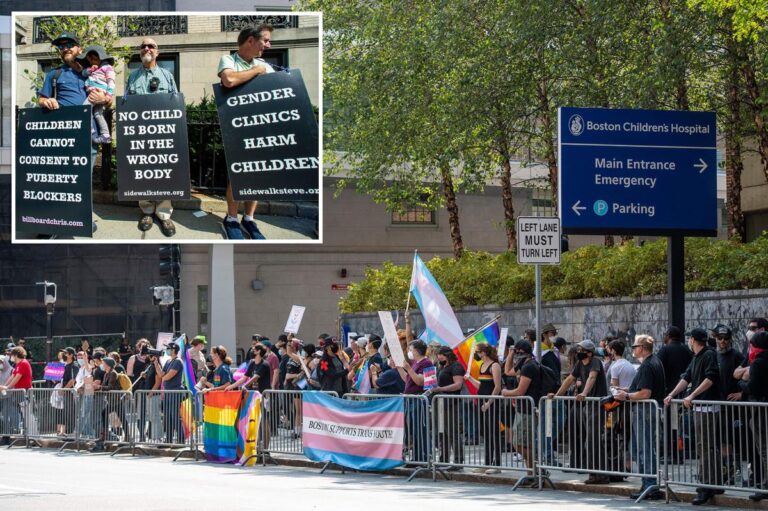
Responses to wokeness vary by political perspective. The far-right labels it a ‘woke dictatorship’ or ‘environmental dictatorship,’ painting it as cultural Marxism threatening white, Christian, capitalist, heterosexual society. “There’s a manic obsession with spotting wokeness, like hyper-motivated Pokémon hunters,” says Gonzalo Torné, author of La cancelación y sus enemigos. Historically, censorship attempts often stem from conservative roots.
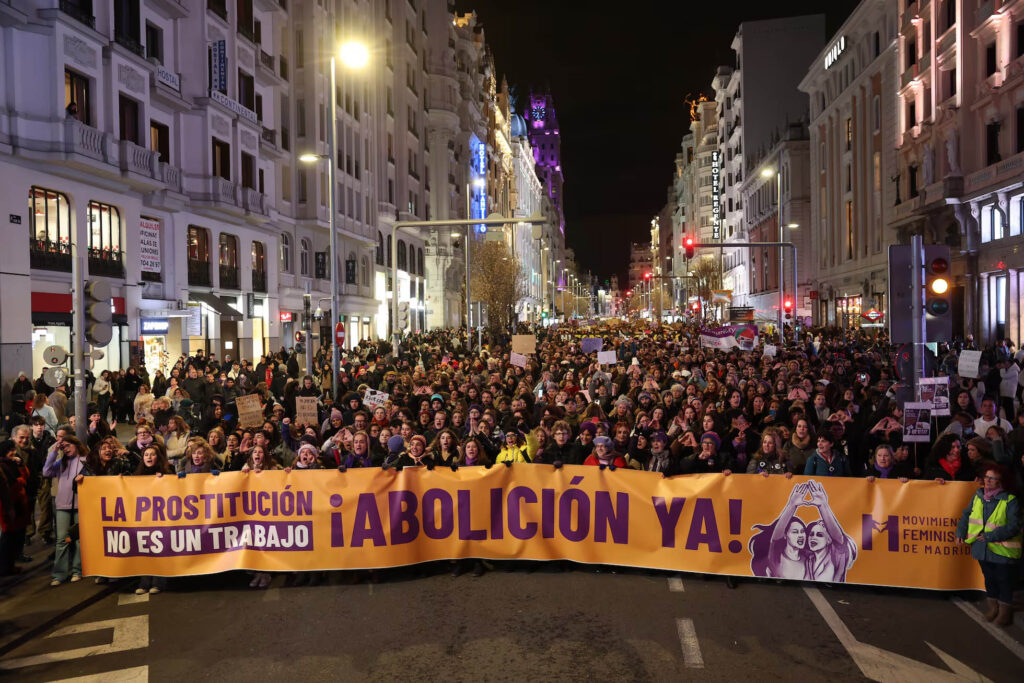
Women’s Day Demonstration in Madrid
The anti-woke right in the U.S. has driven a more extreme conservative agenda, resulting in banned sex education and abortion restrictions in various states. Florida’s Governor Ron DeSantis used the Stop Woke Act to limit anti-sexism and anti-racism content in businesses and schools, though parts were deemed unconstitutional for potentially violating free speech. DeSantis declared Florida the place “where woke goes to die” in his presidential bid.
Woke Capitalism
Woke capitalism faces criticism across the political spectrum, whether in films with feminist messages like Barbie, diverse casting choices, or greenwashed advertising. Some see large corporations adopting inclusive agendas for progress; others view it as leftist radicalism or pure opportunism for image enhancement.
Centrists acknowledge the legitimacy of feminist, LGBTQI+, and environmental struggles but reject wokeness’ extremes, such as cancel culture and puritanism. Within feminism, a rift exists between traditionalists and those embracing queer theory and sex work regulation, evident in some International Women’s Day events.
Some leftists argue engaging in the woke debate means adopting the right’s framework. Others question if certain struggles have overreached and advocate a universalist left focusing on common humanity rather than oppressed minorities, promoting unity over division.
The Anti-Woke Left
Daniel Bernabé’s La trampa de la diversidad ignited debate by claiming woke policies, driven by neoliberalism, fragmented the working class with identity-focused symbolism rather than material struggles. In Left is not Woke, Susan Neiman champions a universalist left against woke’s minority focus, criticizing its tribalism and philosophical roots.
Neiman argues woke’s emotional appeals within the left clash with reactionary philosophies, discrediting the global left by making ‘woke’ synonymous with ‘left.’ This alienates leftists who reject woke’s all-encompassing demands, yet still fight racism, sexism, and homophobia.
The debate recalls 20th-century critiques of Enlightenment modernity from the Frankfurt School and postmodern thinkers, who blamed rationalism for colonialism, domination, and environmental destruction. Philosopher Rosi Braidotti notes Enlightened humanism centered on the white, European, heterosexual male, marginalizing others.
Neiman advocates returning to Enlightenment ideals to achieve noble emancipation goals, asserting woke’s hostility to these concepts is misguided. French philosopher Stéphanie Roza in La Gauche contre les Lumières? notes increasing opposition to rationalism, progressivism, and universalism, leading to a “regression” rather than advancing emancipation.
Cancel Culture
Cancel culture sparks contention, viewed by some as a free speech attack and by others as marginalized voices expressing dissent. Gonzalo Torné argues public figures lamenting cancel culture often do so from powerful platforms, masking attempts to suppress legitimate audience criticism.
Umut Özkirimli in Cancelled: The Left Way Back from Woke likens wokeness to Stalinism, with social death and cancellation instead of gulags. He sees wokeness as narcissistic, prioritizing individual slights over structural injustices, emphasizing personal empowerment over systemic change, and symbolic resistance over collective struggle.
Moving Forward
A faction believes the material versus identity politics schism benefits the right, pitting class against race, gender, or orientation. Éric Fassin, professor of Sociology and Gender Studies, asserts the left must reject this false dilemma, recognizing minorities’ overrepresentation among the working class and advocating for unified policies of recognition and redistribution.